admin@yugongequipment.com



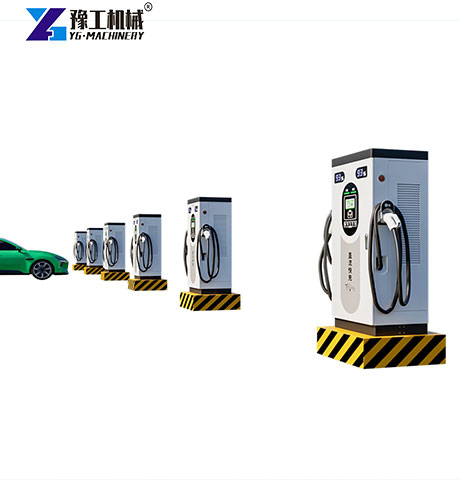
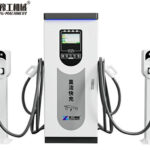
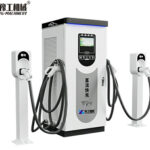
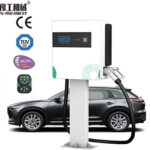
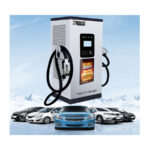
Faced with the growing demand for fast charging of electric vehicles, a high-performance DC Quick Charger has become the core of modern transportation infrastructure. It acts as a “high-efficiency energy station” tailored for electric vehicles, dedicated to providing a convenient experience comparable to refueling fuel-powered cars.
Dc Fast Charger for Sale Specifications
| Technical Indicators | 120KW | 160KW |
| Rated Power | 120KW | 160KW |
| Max. Output Current (Single Gun) | 250A | |
| Max. Output Current (Dual Gun) | 150A*2 | 200A*2 |
| Dimensions | 1700×750×550mm (W×H×D) | 1700×750×550mm (W×H×D) |
| Payment Methods | Card, WeChat Scan, Password | Card, WeChat Scan, Password |
| Charging Modes | Auto full, by time, by kWh, by amount, password charging | Auto full, by time, by kWh, by amount, password charging |
| Display | 7-inch touch screen | 7-inch touch screen |
| Network Connection | Ethernet (4G optional) | Ethernet (4G optional) |
| Cloud Platform | Supports State Grid, Yunquanchong, Xiaoju, TenzCloud | Supports State Grid, Yunquanchong, Xiaoju, TenzCloud |
| Protection Functions | Short circuit, over-temperature, over-current, leakage, input over/under-voltage | Same |
| Input Voltage | AC380V±20% | AC380V±20% |
| Input Frequency | 50Hz±10% | 50Hz±10% |
| Number of Guns | Dual | Dual |
| Gun Cable Length | 5m standard (optional) | 5m standard (optional) |
| Output Voltage Range | DC300-1000V adjustable | DC300-1000V adjustable |
| Output Voltage Error | ≤±0.5% | ≤±0.5% |
| Output Current Error | ≤±1% | ≤±1% |
| Voltage Regulation Accuracy | ≤±0.5% | ≤±0.5% |
| Current Regulation Accuracy | ≤±1% | ≤±1% |
| Harmonic Content | ≤±5% | ≤±5% |
| Power Factor | ≥0.99 | ≥0.99 |
| Efficiency | ≥95% | ≥95% |
| Energy Metering | Class 1.0, GB standard | Same |
| Insulation Resistance | ≥100MΩ | ≥100MΩ |
| Noise | ≤65dB | ≤65dB |
| Protection Rating | IP54 | IP54 |
| Application | Outdoor/Indoor | Outdoor/Indoor |
| Cooling | Air cooling | Air cooling |
| Working Temperature | -20℃~+50℃ | Same |
| Storage Temperature | -40℃~+70℃ | Same |
| Relative Humidity | 5%~95% | Same |
| Altitude | ≤2000m | ≤2000m |
| Installation | Floor-mounted | Floor-mounted |
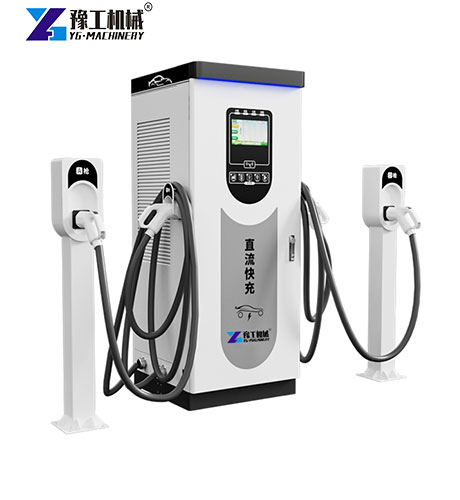
What Constitutes a DC Quick Charger?
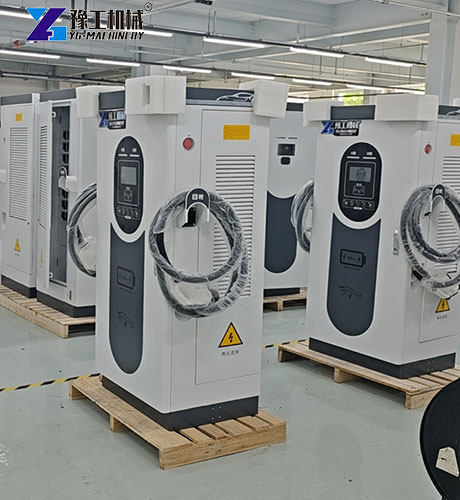
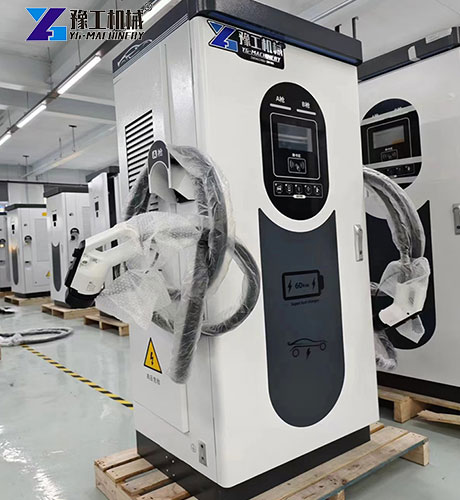
- Power Conversion Unit: The core component responsible for efficiently converting AC power from the grid to DC power required by the battery.
- Control and Communication Module: Serves as the “brain” to handle charging logic, billing, network communication, and execute safety instructions.
- Human-Machine Interface: Usually equipped with a 7-inch touch screen for displaying information and completing interactive operations such as code scanning and card swiping.
- Charging Connection Device: Includes a high-quality charging gun and cable, serving as the final physical interface for power transmission.
- Safety Protection and Heat Dissipation System: Integrates multiple electrical protection circuits and adopts air cooling to ensure stable operation of the equipment.
Why is DC Quick Charger the Preferred Choice?
- Ultra-Fast Charging: The fundamental to realizing quick charge for electric cars, capable of replenishing a considerable driving range in a short time.
- Intelligent Experience: Supports remote control, reservation, and payment via APP, with intuitive and simple interaction through the 7-inch large screen.
- Durable and Safe: IP54 protection rating resists harsh weather, with built-in overvoltage, overcurrent, leakage, and other multiple protections to ensure full-process safety.
- Efficient and Energy-Saving: Adopts advanced topology with high power factor and excellent conversion efficiency, reducing energy loss.
- Easy Management: Easily connects to various operation platforms, enabling remote monitoring, fault diagnosis, and refined operation.
Fundamental Differences Between DC and AC Charging
Understanding different types of electric vehicle charging pile is crucial. AC slow chargers output AC power, relying on the vehicle’s on-board charger for conversion, with generally low power and long charging time. The core advantage of DC Quick Charger lies in its built-in high-power rectifier module, which directly outputs DC power to the battery, bypassing the power limit of the on-board charger, thus achieving charging speed several times or even dozens of times faster than AC charging.
Diverse Applications of DC Quick Charger
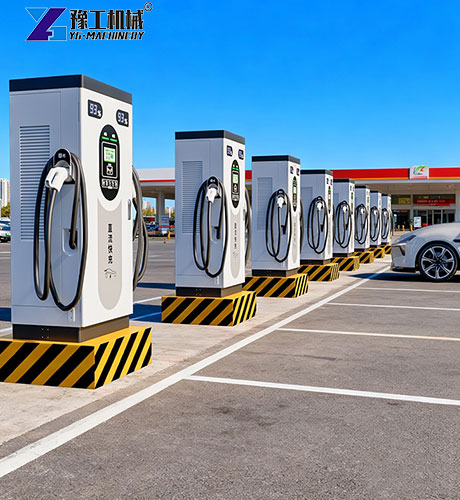
- Public Charging Stations/Parks/Business Districts: Provide fast charging services for private cars and ride-hailing vehicles.
- Bus Terminals/Logistics Parks: Serve electric buses and logistics vehicles on fixed routes, enabling fast charging during nighttime or intermittent periods.
- Factories/Enterprise Parks: Meet the charging needs of internal commuter vehicles, construction machinery, and employees’ vehicles in enterprises.
- Expressway Service Areas: Act as a key energy supplement node for long-distance travel, solving range anxiety.
FAQ About Quick Charge for Electric Cars
Q: Will using DC Quick Charger seriously affect battery life?
A: Regular equipment works in conjunction with the vehicle’s Battery Management System (BMS), strictly charging within the range allowed by the battery. Its comprehensive protection functions are designed to ensure safety, and normal use will not cause significant negative impact on battery life.
Q: How should I choose the appropriate DC Quick Charger power for my site?
A: It is necessary to consider target vehicles (cars or buses), daily average number of served vehicles, and power grid capacity. For operators looking for dc fast charger for sale, 60-80kW is suitable for general public parking lots, while 120kW and above are more suitable for hub stations with dense traffic flow and higher requirements for charging speed.
Q: Is the payment and background management of electric vehicle charging pile troublesome?
A: The equipment supports multiple payment methods such as WeChat, Alipay, and card swiping, and can access cloud platforms via 4G/Ethernet. Operators can realize remote monitoring, revenue statistics, flexible rate setting, etc. in the background, with highly centralized and intelligent management.