admin@yugongequipment.com



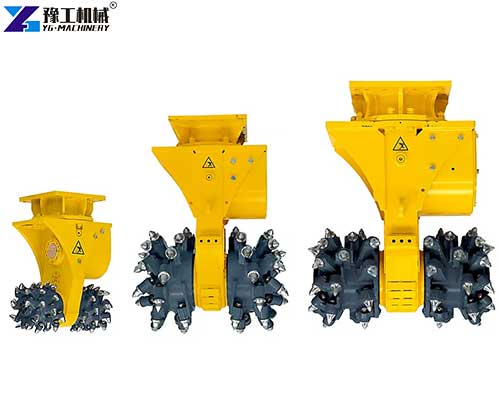
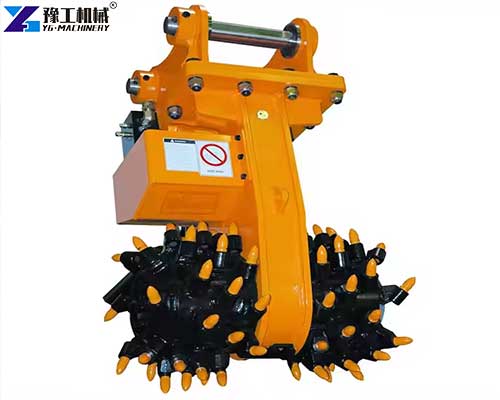
Drum cutter attachment for excavatoris an engineering equipment that cuts hard materials such as rocks and concrete by rotating the cutter disc. It can be quickly installed at the end of the excavator arm. Its core component is the Excavator Drum Cutter, which drives the cutter disc to rotate at high speed through hydraulics to achieve non-explosive precision excavation. Compared with traditional breakers, this type of equipment has low vibration and low noise and is particularly suitable for densely populated urban areas or sensitive geological environments.
Drum cutter attachment for excavator Parameters
Horizontal Excavator Drum Cutter
| Product Model | Applicable Excavator (T) | Weight (kg) | Milling Width (mm) | Milling Head Diameter (mm) | Number of Cutters | Recommended Speed (r/min) | Recommended Flow (L/min) | Max Pressure (Mpa) | Max Torque (NM) |
| HX – X1 | 6 – 9 | 450 | 420 | 340 | 40 | 95 | 80 | 35 | 4700 |
| HX – X2 | 10 – 18 | 550 | 650 | 450 | 56 | 85 | 120 | 35 | 7000 |
| HX – Z1 | 20 – 27 | 1100 | 850 | 560 | 64 | 78 | 220 | 35 | 14300 |
| HX – Z2 | 30 – 40 | 1250 | 950 | 660 | 64 | 75 | 320 | 35 | 23300 |
| HX – D | 45 – 60 | 2450 | 1150 | 850 | 60 | 55 | 360 | 35 | 40300 |
Vertical Excavator Drum Cutter
| Product Model | Applicable Excavator (T) | Weight (kg) | Milling Head Diameter (mm) | Number of Cutters | Recommended Speed (r/min) | Recommended Flow (L/min) | Max Pressure (Mpa) | Max Torque (NM) |
| ZX – 1 | 6 – 9 | 340 | 400 | 28 | 80 | 75 | 35 | 3780 |
| ZX – 2 | 10 – 18 | 480 | 450 | 32 | 80 | 120 | 35 | 7900 |
| ZX – 3 | 20 – 27 | 900 | 550 | 44 | 75 | 200 | 35 | 12700 |
| ZX – 4 | 30 – 40 | 1100 | 580 | 48 | 65 | 260 | 35 | 19600 |
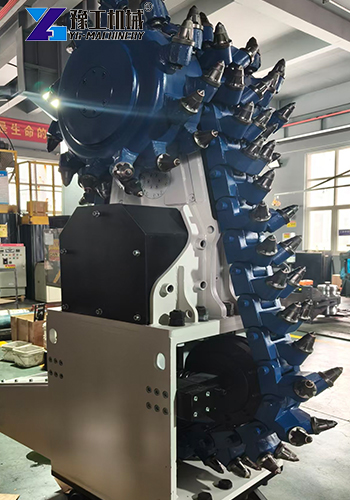
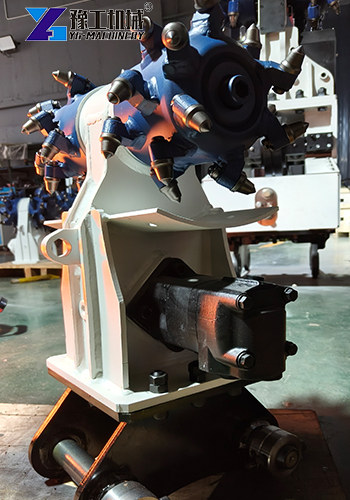
Where are excavator drum cutters widely used?
- Tunnel Engineering: Used for contour trimming of subway and highway tunnels, the Hydraulic Drum Cutter has an accuracy of ±5mm;
- Municipal Renovation: Demolition of old building foundations to avoid damage to surrounding structures caused by blasting vibrations;
- Mining: Cutting of hard rock layers in open-pit mines, replacing blasting to improve safety;
- Pipeline Laying: Trenchless underground trench excavation; Rotary Drum Cutters are suitable for mixed strata of clay and sandstone.
Working principle of hydraulic drum cutter
- Power transmission: The hydraulic system of the excavator drives the hydraulic motor of the Excavator Drum Cutter to rotate the cutter disc;
- Cutting operation: The alloy teeth on the cutter disc cut into the rock formation at a speed of 10-30rpm, crushing the material through axial pressure;
- Debris handling: During the rotation process, the debris is automatically discharged to both sides to keep the working surface clean;
- Intelligent control: Some Rotary Drum Cutters are equipped with pressure sensors to automatically adjust the speed to prevent overload.
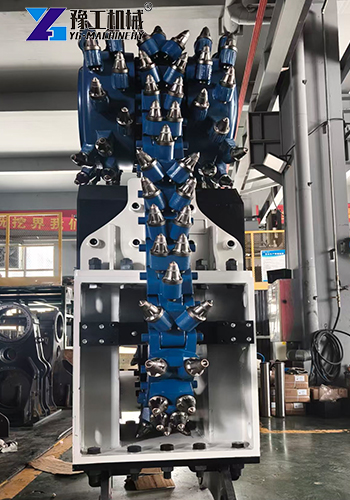
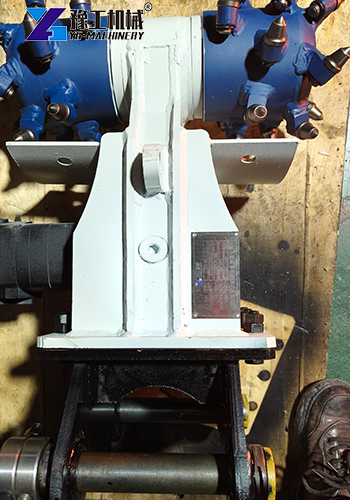
Hydraulic drum cutter vs breaking hammer: how to choose? how to prevent hydraulic oil overheating?
How to make the right choice?
Breaking hammer and drum cutter attachment are both standard rock-breaking attachments for excavators, yet they work on totally different principles and fit separate job sites. A breaking hammer smashes rock via high-frequency impact, ideal for primary breaking, demolition of large blocks, and rough crushing of hard rock. The hydraulic drum cutter cuts rock with a rotating milling drum, perfect for tunnel profiling, trench digging, road planing, slope trimming and other tasks requiring precise, neat cutting surfaces.
Simply put: Use breaking hammers for rough demolition jobs, and a hydraulic drum cutter for precision work. If you need precise rock shaping, controlled excavation profiles and less overbreak, a hydraulic drum cutter is the more professional option. If you only need to crush big rocks for easy loading, breaking hammers deliver higher efficiency at lower cost.
How to stop your excavator hydraulic system from overheating?
Key solutions to avoid hydraulic overheating:
Match the carrier flow rate
The output flow of your excavator hydraulic pump must meet or slightly exceed the recommended flow of the drum cutter attachment for excavator. Insufficient flow slows the cutter drum and reduces cutting efficiency. Excessive flow beyond specs triggers relief valve overflow, rapidly heating hydraulic oil, damaging seals and degrading oil quality.
Match the carrier pressure
Make sure the excavator main relief pressure never exceeds the cutter’s max working pressure of 35MPa. If the excavator factory pressure is higher, adjust it down below 35MPa to protect the cutter motor and excavator hydraulic parts.
Fit a hydraulic oil cooler
For long-hour operation in hot weather or heavy-duty conditions, install an extra standalone hydraulic oil radiator or fan cooler to keep oil temperature under 80°C.
Take cooling breaks during operation
During continuous heavy work, let the machine idle for 3–5 minutes every 1–2 hours to cool the hydraulic system; avoid nonstop full-load running.
Daily routine inspection
Check hydraulic oil level and quality regularly. Top up oil when low, and replace oil right away if emulsified or deteriorated. Clear dust and debris from the radiator to keep airflow unblocked.
Add auxiliary cooling
If the excavator’s original cooling system lacks capacity, mount an independent hydraulic oil radiator or fan cooler to lower oil temperature and cut downtime risks.
Proper flow and pressure matching not only unlock the full performance of the drum cutter attachment for excavator, but also safeguard your excavator hydraulic system and extend the whole machine’s service life.
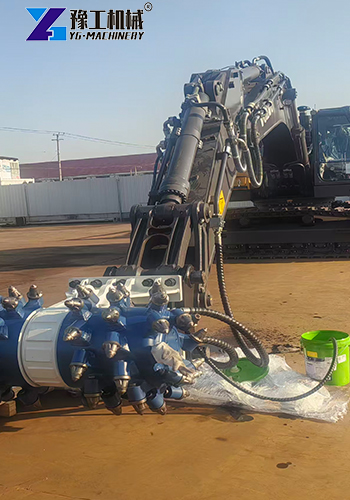
Customer feedback on YG rotary drum cutters
- German Tunnel Engineering Company:
“YG’s Drum Cutter Attachment for Excavator performed excellently in the Stuttgart Metro project, advancing an average of 18 meters per day, 50% faster than traditional methods, and with zero vibration complaints.” - China Mining Group:
“Using YG’s Hydraulic Drum Cutter to process iron ore strata, the tool life was extended by 40%, and the overall cost was reduced by 25%.” - Japanese Municipal Department:
“Rotary Drum Cutters achieved an accuracy of ±3mm in the reconstruction of Tokyo’s underground pipe gallery, perfectly avoiding existing pipelines.”