admin@yugongequipment.com



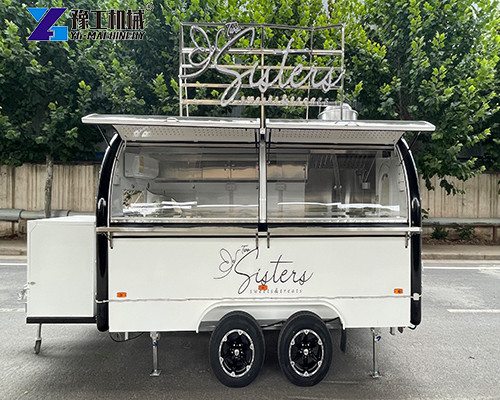
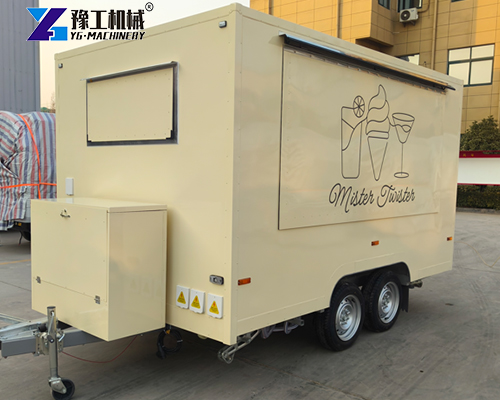
Mobile catering is growing rapidly across North America and Europe. From street sales to weddings and corporate events, operators need a unit that can hit the road and start service right on site. A portable kitchen trailer delivers a full cooking and serving space. It cuts upfront investment and gives you greater flexibility for business locations. For anyone looking to enter the catering industry with lower barriers, it is a solid starting point to consider.
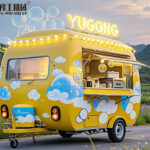
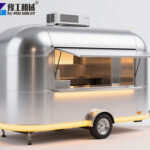
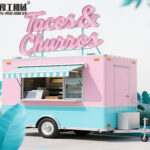
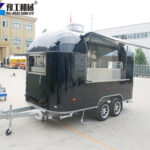
Parameters of YG Best-Selling Food Catering Trailer
| Main body: Frame + sandwich panel (composite panel)Floor: Anti – slip aluminum checkered plate Door: 1 set Windows: 1 large and 1 small (the large window includes an external display panel)Cabinets: Included, 201 stainless steel Water system: Double sinks + 2 25 – liter water buckets Electrical system: Lighting lamps + 2 sockets per meter | 300F | 3000*2100*2100 |
| 350F | 3500*2100*2100 | |
| 400F | 4000*2100*2100 | |
| 450F | 4500*2100*2100 | |
| 500F | 5000*2100*2100 | |
| 550F | 5500*2100*2100 | |
| 600F | 6000*2100*2100 | |
| 700F | 7000*2100*2100 | |
| 800F | 8000*2100*2100 |
Why the Portable Kitchen Trailer Is the Backbone of Modern Mobile Catering
Trailer-style units let operators take full control over where and when they run their business.
- Lower upfront financial pressure: A food catering trailer does not require an extra towing vehicle for daily operation. It reduces startup costs and makes ongoing expenses easier to forecast.
- Long-term operation at fixed sites: Once positioned, the unit can stay at a fixed location such as business parks, market parking lots or event venues, allowing continuous service without repeated relocation.
- Flexible sizes for different needs: Compact models fit narrow city stalls, while larger versions support high customer flow for multi-day events. The product line covers all business scales.
This flexibility makes a mobile catering trailer suitable for solo entrepreneurs testing new concepts, fleet operators expanding capacity, and event caterers who need stable food service across different sites.
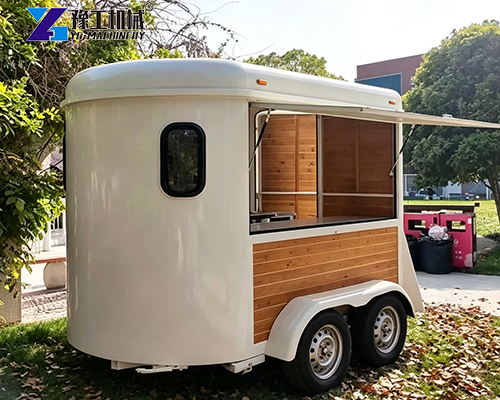
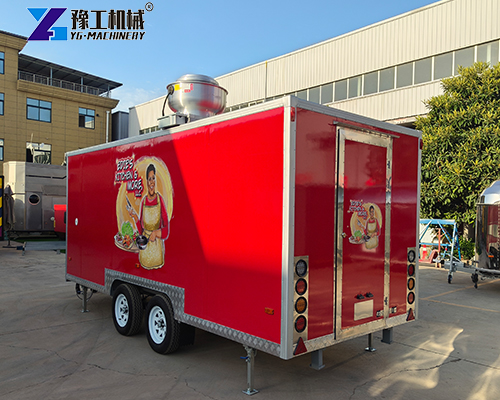
In-Stock Models Ready to Ship – See What’s Available
5 Key Factors When Shopping for a Mobile Catering Trailer for Sale
Picking the right unit directly affects compliance, operating costs, and service life of your asset. When you evaluate any mobile kitchen trailer for sale, focus on these five factors.
1. Compliance certifications: FDA and CE are the baseline
Food-contact materials and electrical systems are strictly regulated in the US and EU. Non-compliant units may face customs hold-ups, failed inspections, or mandatory modifications after delivery.
- FDA food contact standards: All materials touching food during prep and service are selected to meet FDA requirements.
- CE/ETL electrical safety certification: Wiring, components, and power systems are manufactured to European and North American electrical safety standards.
- Compliance outcome: All finished food trailers meet FDA food-contact material standards and CE/ETL electrical safety certification, so you can clear customs and operate without compliance issues.
For overseas buyers sourcing a mobile kitchen trailer for sale, verifying these certifications before purchase is one of the best ways to avoid costly shutdown losses.
2. Insulation performance: decides your service range and energy costs
Insulation determines how well the trailer holds stable temperatures in hot and cold weather.
- Construction method: One-piece sandwich panels filled with high-density, flame-retardant insulation cotton.
- Field test result: It can keep the interior below 5°C for up to 4 hours when the outdoor temperature hits 35°C.
- Operational benefit: It greatly cuts fridge power use and supports reliable cold storage for summer service in hot regions.
- Cold weather advantage: The same insulated structure helps retain heat inside during winter operation in cold areas.
For any portable kitchen trailer used across seasons, insulation directly impacts daily energy bills and food safety margins.
3. Corrosion protection and structural durability: backed by salt spray test data
Operators in Europe often work in rainy, humid environments. Unprotected steel will corrode quickly.
- Chassis treatment: The chassis adopts cathodic electrodeposition anti-corrosion coating for Europe’s rainy climate.
- Test standard: Passed the 720-hour neutral salt spray test under ISO 9001.
- Long-term value: This treatment preserves structural integrity in coastal, damp, and high-humidity areas, keeping the trailer in good appearance and load capacity for years.
For a food catering trailer expected to serve for many years, this level of anti-corrosion treatment is a practical operational requirement, not an optional upgrade.
4. Food safety design: workstation layout built on HACCP principles
Health inspections in Europe and North America focus heavily on cross-contamination risks, separated workflow paths, and easy-to-clean surfaces.
- Layout rule: Workstations follow HACCP principles to separate raw and cooked food with a logical workflow.
- Operation flow: The interior creates a hygienic sequence from storage and food prep to order delivery.
- Inspection performance: Helps you pass the strictest local health inspections.
For any mobile catering trailer serving the public, smart interior design is not a cosmetic add-on, but a functional requirement for daily food safety work.
5. Manufacturing and quality checks: testing from raw materials to finished units.
Durability starts with material selection and controlled assembly.
- Tow frame: The YG pull behind food trailer uses 50×4 steel pipes with precise angles and arrangement.
- Internal reinforcement: 4×4 full pipe bracing is installed to boost overall rigidity.
- Interior wall material: Rock wool fireproof board with fire resistance.
- Production process: Detail confirmation → QC inspection → Rain test → Sun exposure test → Electric & water test → Drop impact test from height.
Every step is recorded to confirm the unit is ready for export and daily operation.
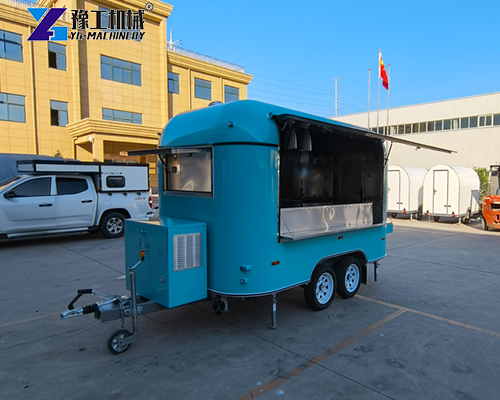
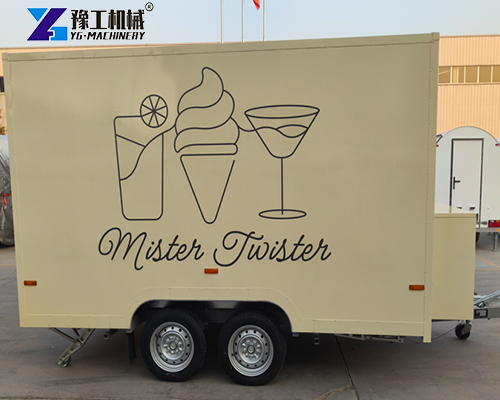
Lock In Today’s Factory Price – Request a Quote Now
Built for Compliance and Long Service Life: Inside YG Portable Kitchen Trailer Manufacturing
YG treats manufacturing as a standard-driven process.
- Raw materials: Selected based on food contact safety, structural strength, and anti-corrosion performance.
- Assembly: Follows controlled welding, panel forming, and system installation procedures.
- Every portable kitchen trailer goes through QC inspection before shipment.
- Factory tests include rain, sun exposure, electric-water, and drop impact tests to verify performance.
All series share the same core configuration. No matter which size operators choose, they get consistent build quality. For buyers looking for a mobile kitchen trailer for sale, direct factory supply means you can review and customize specifications before final production.
Profit-Making Scenarios for the Portable Kitchen Trailer
This mobile unit generates revenue in many different locations.
- Street food sales: The most common entry point. Operators serve food in high-foot-traffic zones with low fixed overhead.
- Wedding and corporate event catering: A food catering trailer can provide plated or buffet service at off-site venues.
- Music festivals and markets: Multi-day events bring heavy foot traffic. Efficient workflows and reliable equipment turn visitors into profits.
- Campus and industrial park meal service: Stable weekday demand lets a mobile catering trailer serve breakfast, lunch, and shift meals on a predictable schedule.
All these scenarios call for a compliant, durable trailer designed for food-safe operation.
Get Free Quotes and 2D/3D Layout Plans
YG has exported many portable kitchen trailer units to buyers in Europe and North America, with compliance records covering FDA food contact standards and CE/ETL electrical safety certification.
- Customization available: YG supports custom sizes, interior layout adjustments, and direct factory pricing.
- Next step: If you are evaluating a mobile kitchen trailer for sale, contact our team to get a free quote and custom 2D/3D layout plans tailored to your menu and operation model.