admin@yugongequipment.com



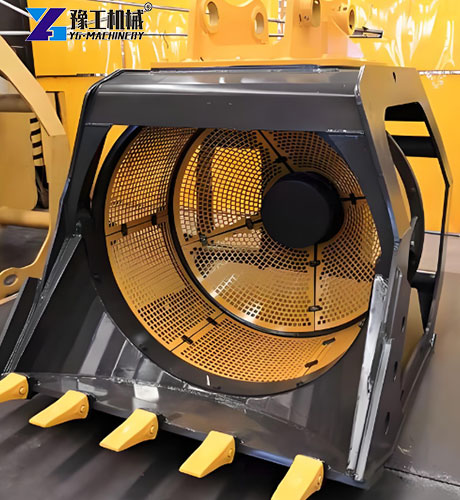
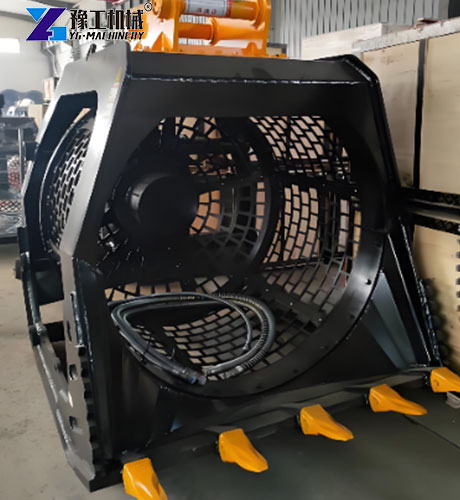
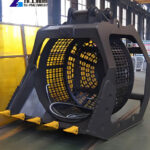
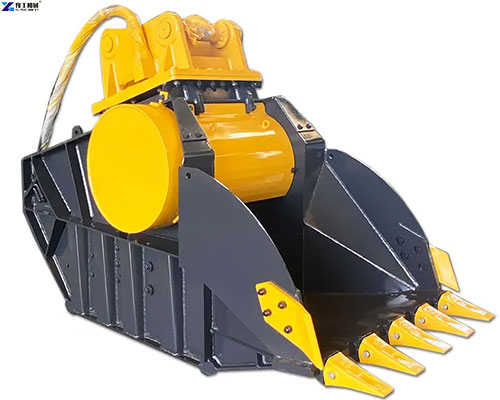
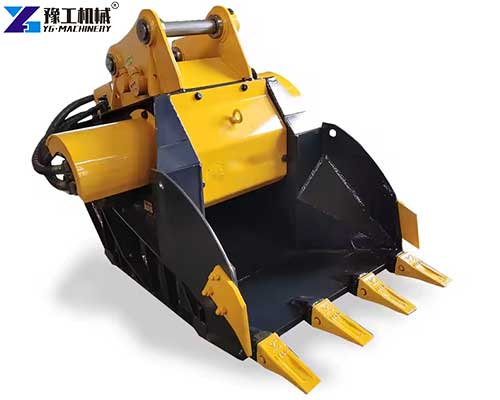
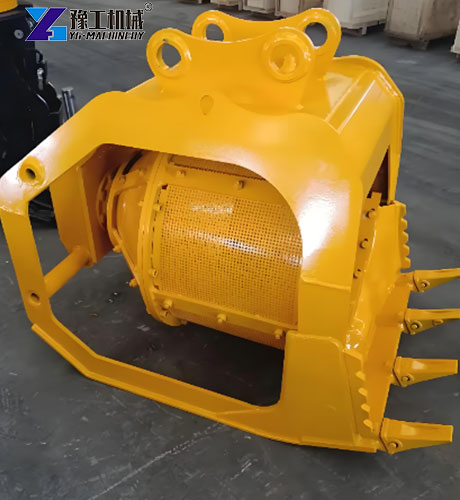
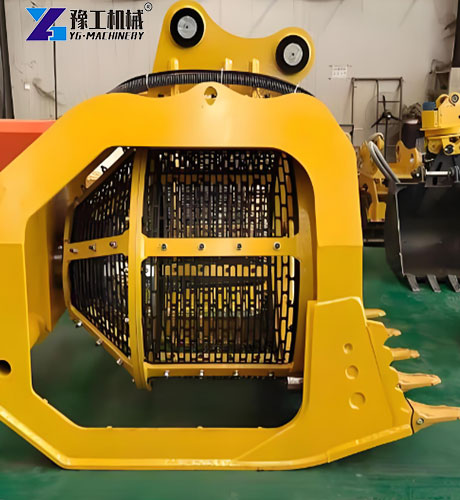
Powered by hydraulic pressure, the drum rotates at high speed. Small materials are thrown out of the bucket, while large materials stay inside — this is how an excavator screener works. It features simple structure, stable operation, replaceable screens, and fits excavators of all tonnages. If you are looking for efficient screening attachments for excavators, keep reading.【WhatsApp/WeChat/Phone】+86 13837122632
Parameters of YG Excavator Screening Bucket for Sale
| Product Model | YG-03 | YG-06 | YG-12 | YG-16 |
| Suitable Excavator (T) | 5-10 | 10-18 | 18-25 | 20-30 |
| Total Weight (KG) | 500 | 950 | 1500 | 1800 |
| Bucket Capacity (m³) | 0.3 | 0.6 | 1.2 | 1.6 |
| Working Pressure (MPa) | 20 | 20 | 20 | 20 |
| Recommended Flow (L/min) | 60 | 80 | 140 | 200 |
| Screen Hole Size | 5-50 | 5-80 | 5-100 | 5-120 |
What Materials Can an Excavator Screener screen?
This digger screening bucket separates small materials by high-speed rotation. It has a wide range of applications:
- Demolition waste treatment: Separate broken bricks, concrete blocks from soil in construction waste. The screened aggregate can be recycled to reduce transportation costs.
- Landfill material excavation: Screen covering soil at landfills, separate stones and debris from humus soil for later backfilling.
- Stone yard recycling: Recover usable crushed stones from waste piles in quarries to improve resource utilization.
- Pebble cleaning: Separate pebbles from sand and mud in rivers or construction sites. Pebbles can be used for landscaping or building materials.
- Natural stone screening: Extract usable stones from surface soil or weathered rock to improve raw material quality.
- River silt cleaning: Separate stones and garbage from silt during dredging for easier later treatment.
What Are the Suitable Scenarios for an Excavator Screener?
The advantage of screening attachments for excavators is screening while digging. They work best in these scenarios:
- Urban renovation and demolition sites: Narrow space where large screening equipment cannot enter. With an excavator screener, demolition waste is screened on site, separated into bricks and soil for classified transport, doubling efficiency.
- River regulation projects: Long and scattered dredging points with high cost for fixed screening stations. The excavator dredges and screens directly in the river, keeping stones and transporting silt away in one step.
- Mountain road construction: A large amount of soil and stone mixture from excavation. This attachment screens on site: crushed stones for road base, soil for slope backfilling, reducing transportation costs.
- Landscaping work: High demand for humus soil. It processes green waste and soil mixed with tree roots, producing clean humus soil for direct backfilling.
- Mine waste yards: Valuable ore remains in waste piles. It screens on site to recover usable ore and level tailings.
How to Choose the Right Excavator Screener
Choosing the right excavator screener is crucial for different machines and working conditions. Consider these key points:
- Match excavator tonnage: Select the corresponding model based on your excavator. A small excavator with a large bucket lacks hydraulic flow and cannot screen properly; a large excavator with a small bucket is too inefficient.
- Choose screen mesh size: Select according to the final particle size needed. Sizes from 5–120 mm are available. Custom sizes are available upon request to YG.
- Consider material characteristics: For wet clay, use stainless steel screens for corrosion resistance and less sticking. For hard stones, use thickened and wear-resistant screens.
- Check hydraulic flow: Make sure the excavator’s hydraulic flow is within the recommended range. Low flow reduces drum speed and screening efficiency; high flow may damage the hydraulic motor.
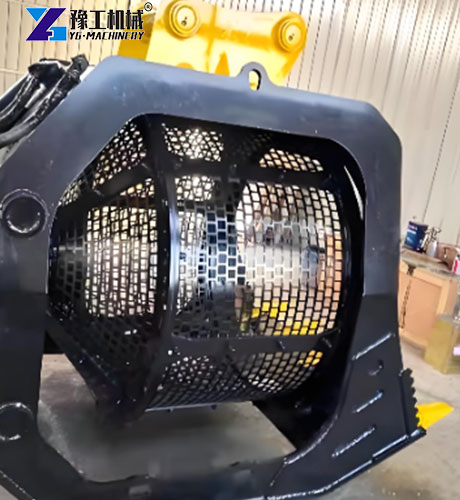
- Check material and workmanship: Prefer models with wear-resistant steel for screen teeth and inner protection, good welding and long service life. Screens made of high-quality stainless steel are shockproof, corrosion-resistant, and high-loading.
Causes and Solutions for Digger Screening Bucket Clogging
Clogging is the biggest problem in screening, reducing efficiency and increasing cleaning time. Common causes and solutions:
- Excessive moisture in materials: Wet materials easily stick to the screen. Solution: Control feeding speed, take less material each time, extend screening time, or use a larger screen mesh.
- Improper screen mesh size: Materials close to mesh size get stuck easily. Solution: Replace with a proper mesh or use a double-layer screen design.
- Feeding too fast: Too much material at once cannot be separated in time. Solution: Control single digging volume and keep even, continuous feeding.
- Worn or deformed screen: Mesh becomes larger or deformed after long use. Solution: Inspect the screen regularly and replace worn parts in time.
- Improper operation: Wrong rotation direction or unmatched speed. Solution: Set correct rotation direction per the manual and adjust speed according to materials.
After checking the parameters and understanding the advantages, you are ready for a real machine. YG excavator screening bucket for sale is in stock, with multiple models for different tonnage excavators. Don’t hesitate — improve your screening efficiency today. Contact us for a quote and make your project more efficient.【WhatsApp/WeChat/Phone】+86 13837122632