admin@yugongequipment.com



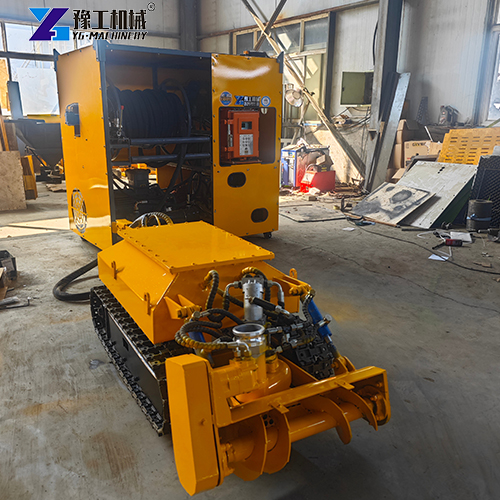
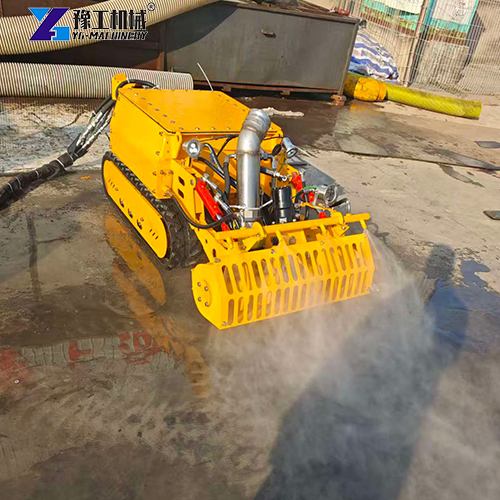
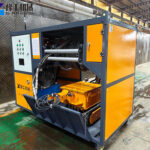
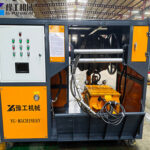
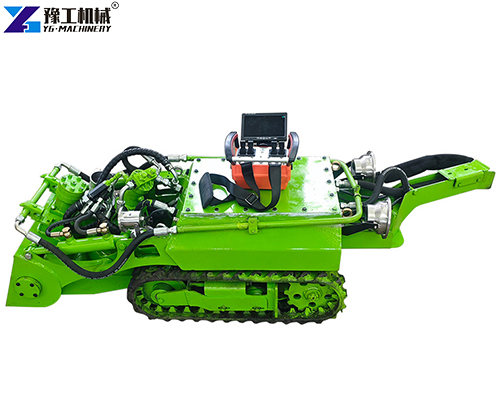
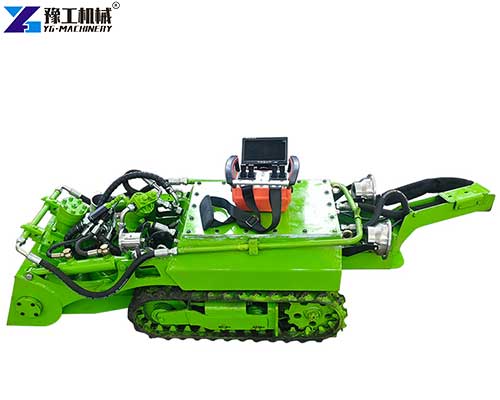
A municipal wastewater treatment plant near Ljubljana, Slovenia serves around 40,000 population equivalents. The plant has two rectangular primary sedimentation tanks (single tank: approx. 20m × 8m × 3.5m deep). After years of operation, sediment has built up to varying degrees on the tank floor. The customer purchased one YG800 Electric model remote control dredging robot to replace the previous manual desilting method for regular maintenance and cleaning of the two primary sedimentation tanks.
YG Hot-Selling Sludge Cleaning Machine Specifications
| Model | YG500 Electric | YG600 Electric | YG700 Electric | YG800 Electric | YG900 Electric | YG1200 Electric |
| Robot Dimensions | 1500×500×650 mm | 1500×600×650 mm | 1600×700×650 mm | 1600×850×700 mm | 1650×960×750 mm | 1900×1200×750 mm |
| Slurry Pump Model | 3E-100Z170 | 3E-100Z170 | 4E-250ZJ45 | 4E-250ZJ45 | 4E-250ZJ45 | 4C-200Z125 |
| Cleaning Width | 500 mm | 600 mm | 700 mm | 800 mm | 900 mm | 1200 mm |
| Track Speed | 3–15 m/min | 3–15 m/min | 3–15 m/min | 3–15 m/min | 3–15 m/min | 3–15 m/min |
| Robot Weight | — | — | — | — | — | 500 kg |
| Pump Inlet Size | 3 inch | 3 inch | 4 inch | 4 inch | 4 inch | 5 inch |
| Pump Flow Rate | 100 m³/h | 100 m³/h | 160 m³/h | 160 m³/h | 200 m³/h | 200 m³/h |
| Pump Head | 0–30 m | 0–30 m | 0–25 m | 0–25 m | 0–25 m | 0–25 m |
| Hydraulic Station Dimensions | 2200×1200×1700 mm | 2200×1200×1700 mm | 2200×1200×1700 mm | 2200×1200×1700 mm | 2200×1200×1700 mm | 2120×1240×1200 mm |
| Main Motor Power | 18 kW | 18 kW | 22 kW | 22 kW | 22 kW | 45 kW |
| Hydraulic System Pressure | 0–16 MPa | 0–16 MPa | 0–16 MPa | 0–16 MPa | 0–16 MPa | 0–16 MPa |
| Max Particle Size | 15 mm | 15 mm | 40 mm | 40 mm | 50 mm | 60 mm |
| Winch Speed | 0–10 r/min | 0–10 r/min | 0–10 r/min | 0–10 r/min | 0–10 r/min | 0–10 r/min |
| Standard Hydraulic Hose Length | 50 m | 50 m | 50 m | 50 m | 50 m | 50 m |
| Control System | Wireless Remote Control | Wireless Remote Control | Wireless Remote Control | Wireless Remote Control | Wireless Remote Control | Wireless Remote Control |
| Lighting System | 2× Underwater LED Lights | 2× Underwater LED Lights | 2× Underwater LED Lights | 2× Underwater LED Lights | 2× Underwater LED Lights | 2× Underwater LED Lights |
In-Stock Models Ready to Ship – See What’s Available
Customer Background & Site Conditions
The customer is a local municipal operation & maintenance company responsible for daily operation and maintenance of multiple surrounding wastewater plants. The desilting work in this project targets the primary sedimentation tank of one of these plants.
Sediments on the tank floor mainly consist of sand grains, organic sludge, and a small amount of fibrous debris. The upstream pipe network has been in service for years, bringing in large volumes of sand. Sand gradually accumulates in low-flow zones at the tank bottom. Some dead-flow corners form a 20–40cm hard sediment layer. The tank floor is fitted with scraper guide rails and sludge hopper structures. Regular desilting tools cannot clean these dead corners effectively.
The customer previously used manual desilting: workers entered the empty tank and used high-pressure water guns plus manual shoveling. Each tank needed to shut down for 3–4 days, requiring 4–6 workers plus safety supervisors. This method had several practical drawbacks: gas residue at the tank bottom required ventilation and gas testing; shutdown reduced treatment capacity; sludge temporarily stacked beside tanks created odor complaints from nearby residents; and labor costs kept rising year by year.
The customer wanted an alternative solution with no personnel entering the tank and no full shutdown. After research and comparison, they selected our remote control dredging robot.
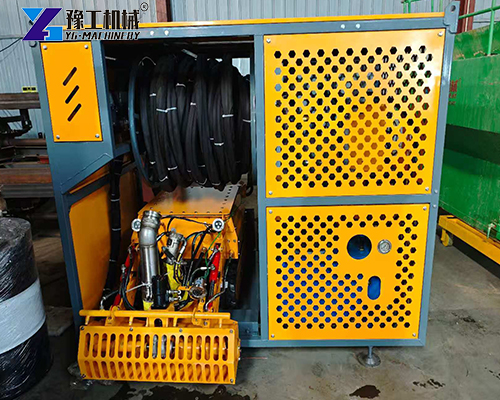
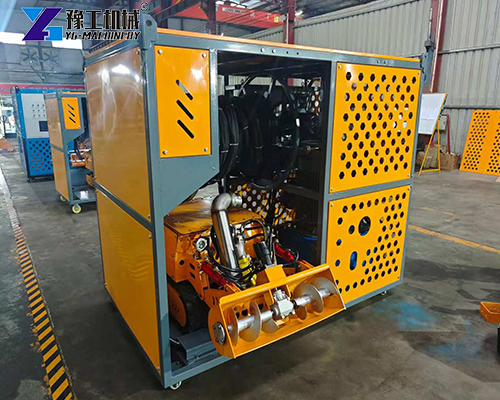
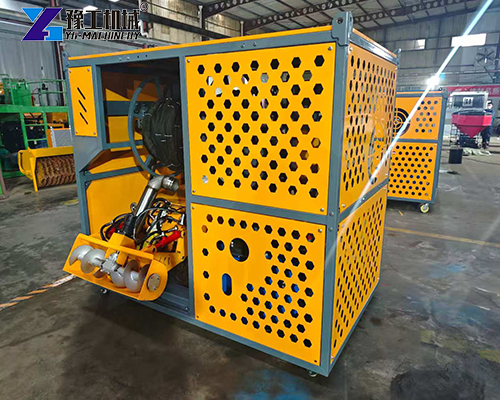
Solution: YG800 Electric Remote Control Dredging Robot Configuration
Based on tank dimensions, sediment properties, and customer requirements, we recommended the YG800 Electric submersible dredging robot for the following reasons:
- Suitable cleaning width. The 800mm cleaning width delivers reasonable efficiency for the 20m×8m tank floor. It will not face turning limits from an oversized machine, nor take too long to operate due to a narrow cleaning width.
- 40mm passing particle size. Sand and small stones exist on the tank floor. Small models with 15mm particle passing size easily cause pump clogging, while YG800 with 40mm size can handle them normally.
- Auger breaking suction head. For hardened sediment layers on the tank floor, the front auger breaks hard sand-sludge mixtures while the suction inlet collects loosened materials. This is the main working head fitted for this project.
- Electric version. The wastewater plant has a three-phase power supply. Electric operation produces no exhaust gas, which fits the semi-enclosed workshop environment. No diesel power required.
- Wireless remote control. Operators stand on the platform beside the tank for remote control of crawler travel, working head posture, and pumping speed. No need to go inside the tank.
- Closed pipeline transportation. Mud mixture travels directly from the tank bottom to the on-site post-treatment unit through the 50m hose in fully closed pipelines. The post-treatment unit separates mud and water. Dehydrated solids are transported away, and separated water flows back to the treatment system. No exposed sludge beside the tank.
- Optional high-definition camera to view tank bottom conditions in turbid water.
Project Implementation
- Technical communication. Online video meetings confirmed tank size, sediment status, and operation requirements. The customer provided particle size data of sediment samples to verify that 40mm passing particle size meets needs.
- Configuration & document preparation. Confirmed the auger-breaking suction head as the main working head plus optional camera. Prepared CE documents and operation manuals.
- Production & factory test. Hydraulic test, crawler test, and remote control inspection were completed before delivery of the YG800 submersible dredging robot.
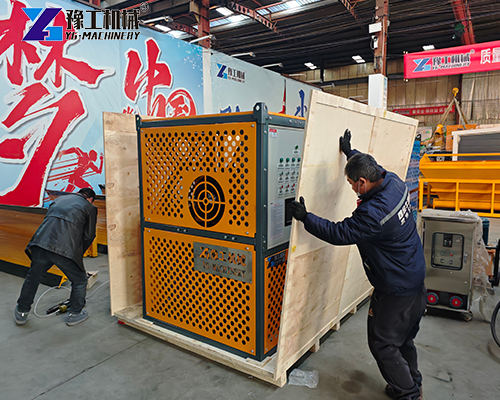
- Shipment. Hydraulic station, robot, and post-treatment modules were packed into one 20ft container for sea freight to Slovenia. The customer’s customs broker handled import formalities.
- Site commissioning & training. Assembly and joint debugging were finished under remote video guidance. Two maintenance staff received 2 days of operation training covering remote control, working head replacement, and post-treatment management.
Operation Results
Desilting of the two tanks was carried out in two alternating rounds, around 5 days per round. The treatment plant kept at least one tank running at all times.
Actual performance:
| Item | Data |
| Personnel entering tank | 0 person |
| Tank shutdown | None (alternating semi-tank construction) |
| Total processed volume | approx. 1,500 m³ mud mixture |
| Working efficiency | approx. 12–16 m³/h |
| Sludge spillage | None (fully closed pipeline transport) |
| Volume reduction after post-treatment | approx. 60% |
| Operators | 2 persons |
Notes:
- Actual working efficiency depends on sediment hardness. Travel speed in hardened zones is obviously lower than in loose sediment areas. The auger breaking head works well on hard layers but reduces moving speed accordingly.
- Sand separated at the post-treatment unit accounts for about 30% of solid residues. The customer stores sand separately from organic sludge for later backfill use.
- Customer feedback shows dead corners on the tank floor are cleaned more thoroughly than manual work. The crawler chassis can travel closely along guide rails and hopper walls, positions where manual shoveling is difficult.
Direct comment from the customer: “The machine meets our core requirements: no personnel enter the tank, no tank shutdown, no odor issues beside the tank. It is easy to learn. After two days of training, the maintenance team can operate independently. We will consider this solution for desilting projects at other plants in the future.”
Remote Control Dredging Robot Application Expansion
Besides municipal primary sedimentation tanks in this project, the remote control dredging robot series can also be used for:
- Pump station wet wells: Smaller and deeper spaces with higher risks for entry. Remote control shows greater advantages here.
- Rivers and reservoirs: Controlled extraction of bottom mud to reduce disturbance to water bodies.
- Industrial storage tanks: Can be used in hazardous environments such as chemical sites when fitted with an explosion-proof motor.
- Pipeline desilting: Compact size of YG500/YG600 suits internal pipeline operation.
The main differences for different applications lie in sediment features, space dimensions, and hazardous atmosphere risks. Model and working head configurations should match actual working conditions. One single solution cannot fit all scenarios. Contact us for customized solutions for your working conditions.
Contact YG
If you need to evaluate the suitability of remote control dredging robot for your project, please contact us. Provide tank dimensions, sediment properties, and required processing capacity, and we will offer matching model and configuration suggestions. The full YG500–YG1200 sediment removal robot series supports CE-certified export, with electric and diesel power options available.