admin@yugongequipment.com



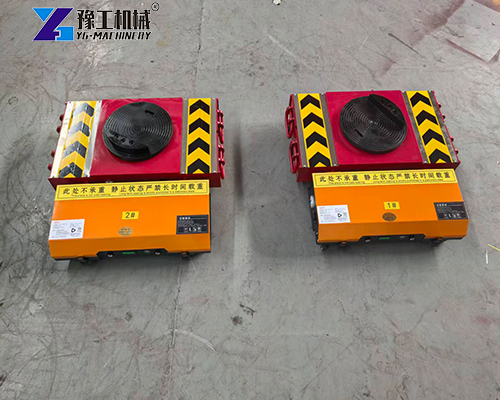
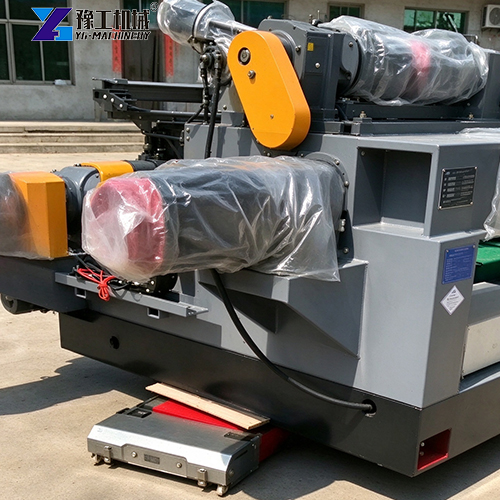
When an Australian manufacturer needed to relocate a roughly 40-ton heavy machine tool inside a narrow production workshop, traditional forklifts, cranes, and manual rollers failed to meet all requirements for space, safety, efficiency, and precise positioning at the same time. In the end, the customer selected a set of 50T battery powered machinery skates for sale. It adopts a three-point support configuration with 1 unit of 50T active drive main unit + 2 units of 8-wheel auxiliary skates. One operator can complete equipment movement, steering, and precise positioning from a safe distance.
For factories, engineering firms, and equipment installation service providers searching for machinery skates for sale in the Australian market, this case fully proves: properly selected equipment can not only cut labor costs, but also spread ground pressure through more wheel sets, improving safety and stability when relocating heavy equipment.
Challenges Faced by the Customer
The customer runs a precision manufacturing factory in Australia. They needed to move a large machine tool from its original position to a new installation zone. The equipment weighs about 40 tons, with high value and strict alignment accuracy requirements. Available space under and around the machine is limited.
On-site difficulties include:
- Narrow workshop aisles with insufficient space for turning.
- Overhead cranes cannot be used conveniently inside the workshop, while bringing in external cranes would disrupt production and raise costs.
- The floor needs protection, with no scratches, indentations, or excessive local load allowed.
- The equipment must not tilt, be dragged, or receive sudden impact.
- The customer wanted fewer workers to work in direct contact with the moving load.
- Precise alignment was required for final positioning instead of rough placement.
Why Traditional Moving Methods Are Not Suitable for This Project
Manual load skates and rollers are common tools for transporting heavy items. However, their safety heavily relies on load balance, floor conditions, and operation coordination. Safety guidelines require confirming the rated capacity of the full skate system exceeds the total equipment weight, keeping the equipment center of gravity within the support range, and moving the load slowly and steadily.
Traditional methods have obvious drawbacks in this project:
- Multiple workers are required to push, steer, and brake together, leading to high communication costs.
- Ordinary forklifts cannot safely approach and operate the equipment in narrow aisles.
- Using cranes brings higher rental, lifting, and on-site coordination costs.
- Manual equipment struggles with fine adjustments during final positioning.
- Operators must stay close to equipment, walls, and potential crush hazard zones.
- Standard skates with fewer wheels may create high concentrated pressure under heavy loads, harming both the floor and equipment base.
Australian work health and safety rules require businesses to assess load weight, size and shape, select proper equipment, and prohibit overloading beyond rated capacity. The wireless remote-controlled battery-powered solution perfectly meets these safety and management requirements.
Lock In Today’s Factory Price – Request a Quote Now
Recommended Electric Machinery Skates for Sale Solution
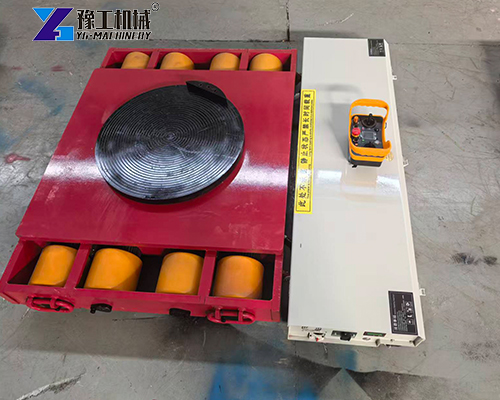
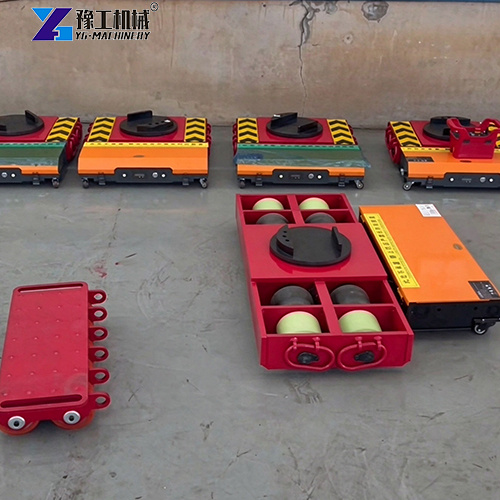
Based on equipment weight, center of gravity position, floor conditions, travel route, and final positioning requirements, we recommended 50T battery powered load moving skates for the customer, paired with two 8-wheel auxiliary skates to form a three-point support system.
Project configuration:
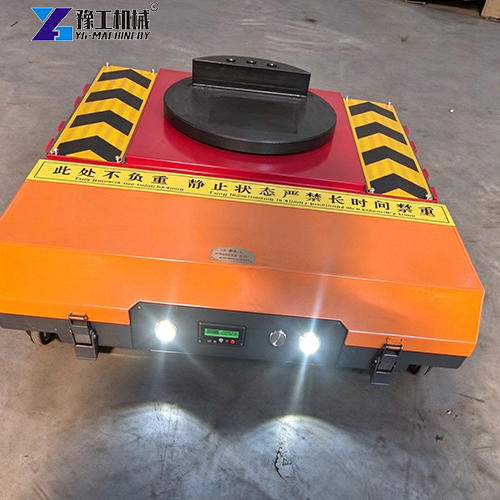
- 1 unit of 50T active drive main unit
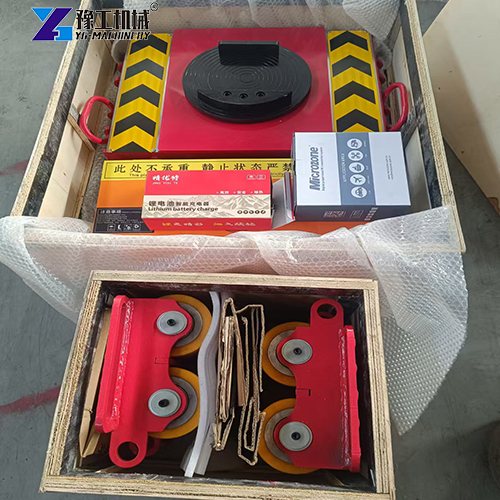
- 2 units of 8-wheel auxiliary skates
- Industrial-grade wireless remote controller
- 48V 120Ah lithium battery system
- 2 × 2000W drive motors equipped with brakes and flange-reinforced gearboxes
- Dual-channel drive controller
The 50T model has a traction capacity of 50 tons and a single-unit load capacity of 25 tons. In this case, the active main unit handles driving, braking, and steering control; the two 8-wheel auxiliary skates share the load and deliver stable support.
Compared with ordinary auxiliary units with fewer wheels, 8-wheel auxiliary skates spread equipment weight across more contact points, helping to:
- Reduce ground pressure per unit area;
- Lower local stress on the equipment base;
- Boost stability of heavy equipment on workshop floors;
- Better adapt to long, heavy machinery or equipment with large bottom support surfaces.
For most heavy equipment relocation projects, 1 main unit + 2 auxiliary skates is the most commonly used configuration. This setup creates three support points, balancing stability, flexibility, and operational efficiency. Safety documents also note that a three-point support layout improves stability, on condition that the equipment’s center of gravity sits near the center of the support zone.
If you need higher stability, in-place translation, or four-point support, you may choose:
- 2 main units + 2 auxiliary skates
- 4 main units with wireless synchronous linkage
The 4-main-unit synchronous solution is especially suitable for integrated transport of extra-long, extra-wide, or irregular heavy objects, ideal for side translation in extremely narrow spaces.
In-Stock Models Ready to Ship – See What’s Available
Key Features That Made the Project a Success
Precise Wireless Remote Control
The machine is fitted with an industrial remote controller with an effective control range up to 50 meters. Operators can stand at a safe distance away from equipment, walls, and potential crush points to control forward movement, reverse, steering, speed regulation, and stop.
Strong Heavy Load and Climbing Capacity
The 50T model adopts two 2000W motors, dual-channel drivers, and reinforced gearboxes. The full product line supports combined load capacities from 60 tons to over 100 tons. It can handle slopes of 3–15 degrees and some unpaved surfaces. Actual performance needs evaluation based on load, center of gravity, and on-site ground conditions.
360° Flexible In-place Steering
The independent wheel drive system delivers near-zero turning radius steering. Operators can adjust equipment direction on the spot without long-distance reversing.
8-wheel Auxiliary Skates for Load Distribution
Both auxiliary skates used in this project adopt an 8-wheel design. Compared with fewer-wheel structures, 8-wheel auxiliary skates spread machine weight more evenly across multiple wheel groups, lowering concentrated ground pressure and reducing stress at the equipment bottom caused by uneven support.
Modular Coordinated Operation
The system supports wireless synchronous linkage of multiple units. It can transport irregular heavy objects such as extra-long machine tool beds, large molds, wide steel structures, transformers, and prefabricated components.
This project was completed with 1 × 50T main unit plus 2 × 8-wheel auxiliary skates. The customer also recognizes that for larger or more complex equipment in the future, the solution can be flexibly expanded by adding more main units and auxiliary skates.
Battery Power & Long Runtime
As battery powered load moving skates, the equipment does not depend on forklifts, tractors, or external power cables during operation. The 50T model comes with a 48V 120Ah battery, offering about 4–5 hours of continuous working time. Travel speed can be adjusted between 2 and 10 meters per minute.
Equipment Relocation Workflow
This relocation followed a standardized safe operation procedure:
- Site survey: Confirm equipment weight, center of gravity, lifting points, floor strength, aisle width, slope, and final installation position.
- Equipment jacking: Lift the machine tool slightly using proper jacking tools and select firm support points to avoid local stress or deformation of the equipment.
- Skate placement: Position 1 unit of 50T active drive main unit and 2 units of 8-wheel auxiliary skates under the machine to form a stable three-point support structure.
- Load inspection: Verify the equipment rests smoothly on the skate bearing surfaces, each wheel set bears uniform load, and the travel route is free of obstacles, debris, and personnel.
- Remote-controlled movement: The operator controls forward travel at low speed via wireless remote, keeping a safe distance at all times.
- Steering in narrow spaces: Use the 360° in-place steering function to adjust machine direction in limited space without large-scale reversing.
- Precise positioning: When the equipment approaches the target spot, the operator reduces speed and makes minor direction adjustments to complete accurate alignment.
- Lowering and removal: After positioning, slowly lower the equipment onto the installation reference plane, remove the skates, and clean up the site.
Project Outcomes & Customer Benefits
This project brought practical benefits for the customer in many aspects:
- Lower labor demand: One trained remote operator leads equipment movement, with a small team for preparation and site monitoring.
- Improved operation safety: Operators control machinery from a safe distance and reduce risks near moving loads.
- No crane required: The customer avoided crane rental fees, space constraints, and production downtime caused by crane entry.
- Workshop floor protection: 8-wheel auxiliary skates distribute load over more wheel sets, cutting concentrated ground pressure and reducing indentation and damage risks.
- Equipment base protection: More uniform support reduces risks of excessive local stress and deformation on the machine tool base.
- Precise positioning: Operators can make fine direction adjustments in the final stage to ensure accurate placement.
- Works in narrow spaces: 360° steering enables transport in areas inaccessible to ordinary forklifts.
- Reusable equipment: After the project, the same set of heavy machinery moving skates can be reused for future equipment installation, maintenance relocation, and workshop layout adjustments.
Ultimately, the customer not only finished this 40-ton equipment relocation smoothly, but also obtained a safer, more efficient, and reusable heavy load moving solution.
How to Select Proper Electric Machinery Skates for Sale
Australian buyers should focus on confirming the following points before purchasing electric equipment moving skates:
- Total equipment weight: Including the main machine, tooling, packaging, attached parts, and other additional loads.
- Center of gravity position: Judge whether the machine is unbalanced, top-heavy, or at risk of tipping.
- Number of support points: Decide on three-point or four-point support according to base length, rigidity, and gravity distribution.
- Wheel set quantity: For heavy machinery or equipment with large bases, auxiliary skates with 8 wheels or more help distribute load better.
- Floor condition: Confirm the floor is solid, flat, clean, and capable of bearing concentrated loads.
- Slopes and road surfaces: Identify ramps, thresholds, expansion joints, and unpaved sections.
- Travel route: Measure aisle width, doorway size, turning space, and final positioning zone.
- Movement requirements: Clarify if straight travel, steering, side translation, or multi-unit synchronous operation is needed.
- Safety margin: Choose models with rated capacity higher than actual demand and ensure reasonable load distribution. Industry recommendations usually require a 20–30% safety margin for skate systems.
Get Your Quote Now
Looking for reliable electric machinery skates for sale in Australia? Feel free to contact us and provide equipment weight, outer dimensions, and site conditions. We will recommend suitable battery powered load moving skates configurations and offer detailed quotations based on your project requirements, helping you complete heavy equipment relocation safely and efficiently.